How Much Does a Business Website Cost? A Complete Guide for 2026
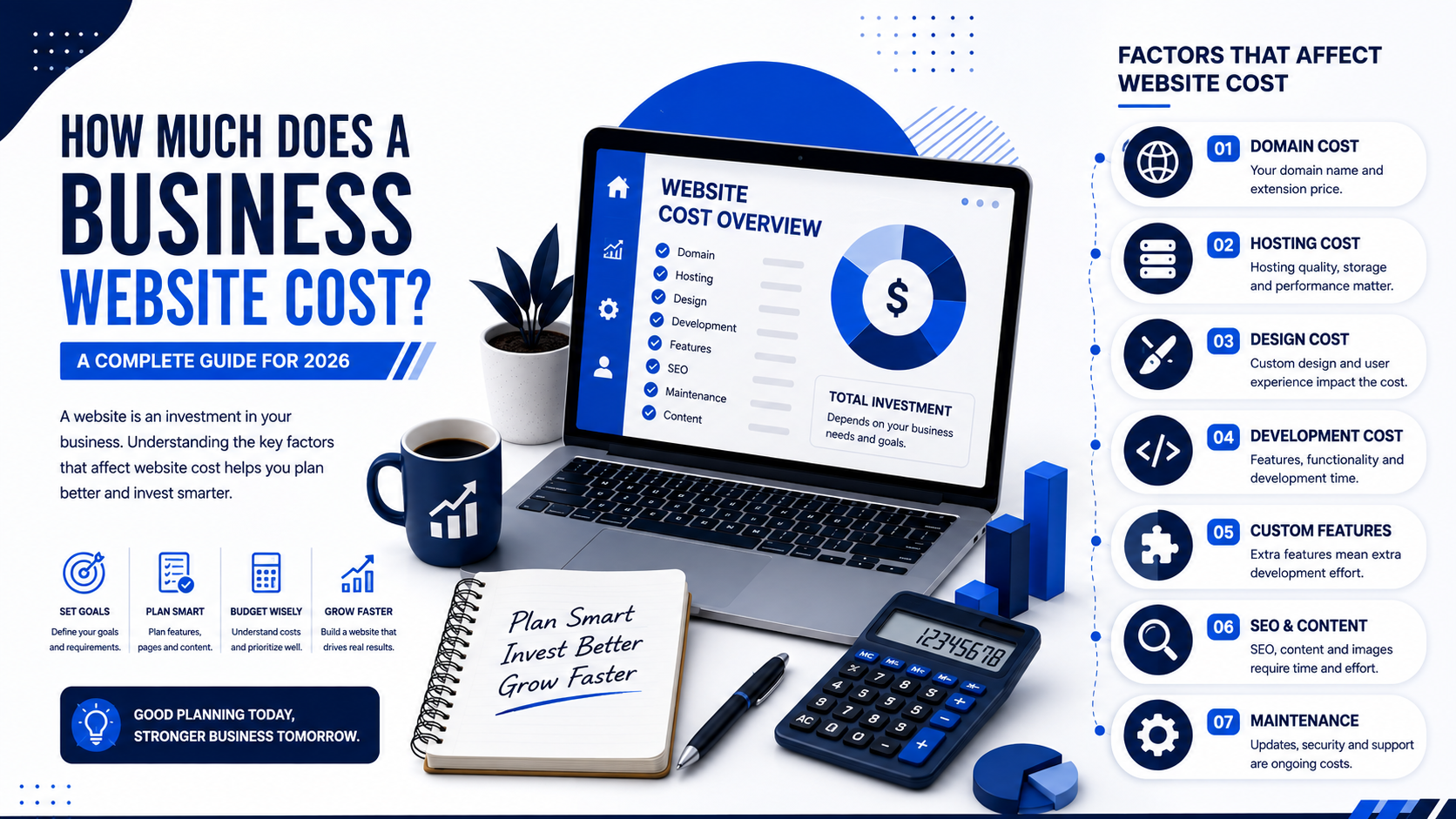
Wondering how much a business website costs? Learn what affects website pricing, including design, development, hosting, features, SEO, content, and maintenance.
How Much Does a Business Website Cost? A Complete Guide for 2026
If you're planning to build a website for your business, one of the first questions you may have is: How much does a business website cost?
There isn't one fixed price for every website. The cost depends on what you need, how the website is designed, what features it includes, and how much customization is required.
A simple business website and a large e-commerce website can have completely different requirements and development costs.
At C2D (Concept to Deploy), we believe businesses should understand what they are paying for before starting a website project.
In this guide, we'll explain the main factors that affect website costs and help you understand what to consider before choosing a website development option.
If you're still deciding what your website should include, read our guide on How to Plan Your Business Website Before You Build It.
Step 1: Decide What Type of Website You Need
Before discussing cost, decide what your website actually needs to do.
Basic Business Website
A basic business website may include Home, About, Services, and Contact pages.
This type of website is suitable for businesses that mainly need a professional online presence and a simple way for customers to learn about their services.
Professional Business Website
A professional business website may include service pages, testimonials, portfolio sections, FAQs, blog articles, enquiry forms, and SEO-friendly structure.
This type of website is useful for businesses that want their website to actively attract and convert customers.
E-Commerce Website
An e-commerce website requires additional functionality such as:
- Product listings
- Shopping cart
- Checkout
- Payment integration
- Order management
- Customer accounts
- Product search and filtering
These additional requirements generally make an e-commerce website more complex than a standard business website.
Custom Web Application
A custom web application may include dashboards, customer accounts, booking systems, management systems, databases, APIs, and other business-specific functionality.
The cost depends heavily on the required features and technical complexity.
Step 2: Plan the Number of Pages
The number of pages can affect design, content, development, and testing time.
A small business website might include:
- Home
- About
- Services
- Contact
A larger website may require separate pages for individual services, products, locations, case studies, FAQs, and other useful information.
However, more pages do not automatically mean a better website. The goal is to create pages that provide useful information to your customers.
At C2D, we recommend planning the website structure before development so unnecessary pages and features can be avoided.
Step 3: Consider the Website Design
Website design is another factor that can affect the overall cost.
Design requirements may include:
- Custom layouts
- Brand colors
- Typography
- Custom graphics
- Animations
- Interactive sections
- Custom illustrations
A simple and clean design can be highly effective for many businesses.
More complex designs usually require additional design and development time.
The most important thing is to choose a design that supports your business goals and provides a good experience for visitors.
Step 4: Understand Development Complexity
The technology and functionality behind a website also affect its cost.
A simple informational website may require straightforward development, while an advanced website may need:
- User authentication
- Databases
- Admin dashboards
- Booking systems
- Payment gateways
- API integrations
- Customer accounts
- Custom business logic
The more complex the functionality, the more development, testing, and maintenance may be required.
Step 5: Consider the Domain Name
Your domain name is the address customers use to visit your website.
For example: yourbusiness.com
Domain pricing depends on the extension and registration provider.
Common extensions include:
- .com
- .in
- .org
- .net
Choose a domain that is short, relevant, easy to remember, and suitable for your business.
Step 6: Consider Hosting
Your website needs hosting so people can access it online.
A simple business website may need basic hosting, while a high-traffic application may require more powerful infrastructure.
When choosing hosting, consider:
- Performance
- Reliability
- Security
- Storage
- Scalability
- Support
Don't choose hosting based only on the cheapest price. Choose an option that matches your website's actual requirements.
Step 7: Content Can Affect Website Cost
Website development and website content are two different parts of a project.
Your website may need:
- Homepage content
- About Us content
- Service descriptions
- Product descriptions
- Blog articles
- FAQs
- Testimonials
If content needs to be researched, written, edited, and optimized, additional work may be required.
Good content is important because visitors should quickly understand what your business does and why they should choose you.
Step 8: SEO Is Part of the Website Investment
SEO helps your website become easier for search engines and users to understand.
SEO work may include:
- Keyword research
- Page titles
- Meta descriptions
- SEO-friendly content
- Internal linking
- Image optimization
- Technical SEO
- Local SEO
SEO should ideally be considered during website development rather than added only after the website is complete.
Learn more in our guide on How SEO Helps Your Business Website Rank on Google.
Step 9: Custom Features Increase Development Requirements
Some businesses need features that aren't included in a standard website.
Examples include:
- Online appointment booking
- Customer dashboards
- Membership systems
- Online payments
- Inventory management
- Advanced search
- Automated notifications
- Third-party integrations
Custom functionality requires additional planning, development, testing, and maintenance.
Before adding a feature, ask: Does this feature solve a real business or customer problem?
Step 10: Maintenance Is an Ongoing Cost
Building your website is only the beginning.
A website may require ongoing maintenance such as:
- Content updates
- Security updates
- Backups
- Performance monitoring
- Bug fixes
- Software updates
- SEO improvements
Regular maintenance helps keep your website secure, accurate, and useful.
Read our guide on How to Maintain and Grow Your Business Website.
Basic Website vs Professional Website vs Custom Website
| Website Type | Suitable For | Typical Requirements |
|---|---|---|
| Basic Website | Small businesses needing an online presence | Basic pages, simple design, contact information |
| Professional Website | Growing businesses | Custom design, multiple pages, SEO, forms, portfolio, better user experience |
| E-Commerce Website | Businesses selling products online | Products, cart, checkout, payments, orders |
| Custom Web Application | Businesses with unique workflows | Dashboards, databases, accounts, APIs, custom functionality |
Why You Shouldn't Choose a Website Based Only on Price
The cheapest website isn't always the best choice.
Before choosing a developer or development company, consider:
- Design quality
- Development quality
- Mobile responsiveness
- SEO structure
- Security
- Performance
- Communication
- Support
- Future scalability
A website is an investment in your business's online presence.
Instead of asking only, "How cheap can I get a website?", also ask, "What value will this website provide to my business?"
Questions to Ask Before Hiring a Website Developer
Before starting your project, ask:
- What is included in the website package?
- How many pages are included?
- Is the website mobile-friendly?
- Is basic SEO included?
- Who provides the content?
- Who provides the images?
- Is hosting included?
- Who owns the website after completion?
- Is maintenance available?
- What happens if I need changes later?
How to Plan Your Website Budget
Instead of starting with only a price, start with your business requirements.
Make a list of:
- Pages you need
- Features you need
- Content you already have
- Content that needs to be created
- SEO requirements
- Hosting requirements
- Maintenance requirements
Once you understand these requirements, you can compare website development options more effectively.
What Makes a Website Worth the Investment?
A website becomes more valuable when it helps your business achieve real goals.
A good website can help you:
- Generate enquiries
- Reach new customers
- Showcase your work
- Sell products
- Receive bookings
- Build trust
- Improve your online presence
The right website isn't necessarily the most expensive one. It is the website that matches your business needs and provides value to your customers.
Website Cost Checklist
- Define your website goals
- Choose the website type
- Plan the number of pages
- Decide your design requirements
- List required features
- Plan your content
- Consider domain costs
- Consider hosting costs
- Plan your SEO requirements
- Consider maintenance
- Compare developers based on value
- Ask what is included before starting
Final Thoughts
So, how much does a business website cost?
The honest answer is: it depends on what your business actually needs.
A simple informational website will have very different requirements from an e-commerce store or a custom web application.
Instead of choosing a website based only on the lowest price, understand what you're getting and whether the website will help your business achieve its goals.
At C2D (Concept to Deploy), we believe every website should be planned around the business, its customers, and its actual requirements.
Build the Right Website for Your Business With C2D
At C2D, we help businesses turn their ideas into professional digital solutions.
From website planning and design to development, SEO, deployment, and ongoing improvements, we focus on building solutions that are practical and useful.
Have a website idea? Let's turn your concept into something that works with C2D.
Continue Your Website Journey With C2D
You've now learned what affects the cost of building a business website.
Before moving forward, you can review Common Website Mistakes Businesses Should Avoid.
Next, learn how to choose the right development partner with How to Choose the Right Website Development Company for Your Business.
What's Next?
Understanding your website requirements and budget is important, but choosing the right development company is equally important.
In our next guide, we'll explain what to look for when choosing a website development company, including their portfolio, technical expertise, SEO knowledge, communication, pricing, and ongoing support.
Previous: Common Website Mistakes Businesses Should Avoid
Next: How to Choose the Right Website Development Company for Your Business