Content Marketing Strategy for Small Businesses | C2D
Learn how to create a practical content marketing strategy for your small business, including content ideas, SEO, social media, planning, and measuring results with C2D.
Content Marketing Strategy for Small Businesses
People rarely become customers after seeing a business only once. Before making a decision, they may search Google, visit a website, check social media, read reviews, compare options, and look for useful information.
This is why content marketing has become an important part of digital marketing for businesses of all sizes.
Content marketing helps businesses provide useful information to their target audience instead of relying only on direct advertising.
At C2D (Concept to Deploy), we believe good content should have a purpose. It should help people understand a problem, answer their questions, build trust, and guide them toward the next step.
In this guide, we'll explain what content marketing is, why it matters, how to create a content marketing strategy, and how small businesses can use content to support SEO, social media, websites, and business growth.
What Is Content Marketing?
Content marketing is the process of creating and distributing useful, relevant, and valuable content to attract and engage a specific audience.
Content can take many forms, including:
- Blog posts
- Website pages
- Guides
- Videos
- Images
- Infographics
- Case studies
- FAQs
- Social media posts
- Email newsletters
The purpose is not simply to create more content. The purpose is to create content that is useful to the people your business wants to reach.
Why Is Content Marketing Important for Small Businesses?
Small businesses may not have the same advertising budgets as large companies. Content marketing can provide another way to demonstrate expertise, answer customer questions, and build an online presence.
A good content strategy can help a business:
- Increase brand awareness
- Attract website visitors
- Support SEO
- Build customer trust
- Answer common questions
- Generate leads
- Support social media marketing
- Explain products and services
- Build long-term online visibility
However, publishing content does not automatically produce results. Content needs to be useful, relevant, consistent, and connected to a clear business goal.
How Does Content Marketing Work?
A simple content marketing journey can look like this:
Question → Content → Website → Trust → Action
For example, a person may search for information about website development costs.
They discover a useful article from a website development company.
After reading the article, they explore the company's services and eventually contact the business.
The content helped introduce the business before the person became a customer.
Content Marketing vs Traditional Advertising
Traditional advertising generally focuses on promoting a product or service directly.
Content marketing focuses more on providing information that the audience finds useful.
For example, instead of publishing an advertisement that simply says:
"We build websites. Contact us today."
A business could create an article explaining:
"How to Choose the Right Website for Your Small Business."
The second approach can answer a question a potential customer is already asking.
Both advertising and content marketing can have a place in a digital marketing strategy. They simply serve different purposes.
Types of Content Small Businesses Can Create
There is no single type of content that every business should create.
Choose formats that match your audience, industry, resources, and goals.
1. Blog Posts
Blog posts are one of the most useful content formats for businesses that want to answer customer questions and support SEO.
Examples include:
- How-to guides
- Industry tips
- Common mistakes
- Frequently asked questions
- Comparisons
- Checklists
- Beginner guides
2. Service Pages
Service pages explain what your business offers and why customers should consider your service.
A service page should clearly explain:
- What the service is
- Who it is for
- What problem it solves
- What the process involves
- Why your business can help
- How customers can contact you
3. Videos
Video content can demonstrate products, explain services, answer questions, and show how something works.
4. Social Media Content
Blog posts and website content can also be transformed into social media content.
For example, one detailed article can become:
- Several social media posts
- A short video
- An infographic
- A carousel post
- A short educational reel
5. Case Studies
Case studies can show how your business helped solve a real customer problem.
They can be useful for demonstrating experience and building trust.
6. FAQs
Frequently asked questions can help customers quickly find answers to common concerns.
They can also provide useful information for people researching your products or services.
How to Create a Content Marketing Strategy
A successful content strategy starts with planning rather than randomly publishing articles.
Step 1: Define Your Business Goal
Start by deciding what you want your content to achieve.
Your goal could be:
- Increase website traffic
- Generate leads
- Increase enquiries
- Build brand awareness
- Improve search visibility
- Educate customers
- Support sales
A clear goal makes it easier to decide what content you should create.
Step 2: Understand Your Target Audience
Before creating content, understand who you are trying to reach.
Think about:
- Who your customers are
- What they need
- What problems they have
- What questions they ask
- What information they search for
- What prevents them from making a decision
The better you understand your audience, the easier it becomes to create useful content.
Step 3: Find Customer Questions
One of the easiest ways to find content ideas is to identify questions customers repeatedly ask.
For example, a website development business may receive questions such as:
- How much does a website cost?
- How long does website development take?
- Do I need a website for my small business?
- What pages should a business website have?
- How can I improve my website's SEO?
- How can I make my website mobile-friendly?
Each question can potentially become a useful piece of content.
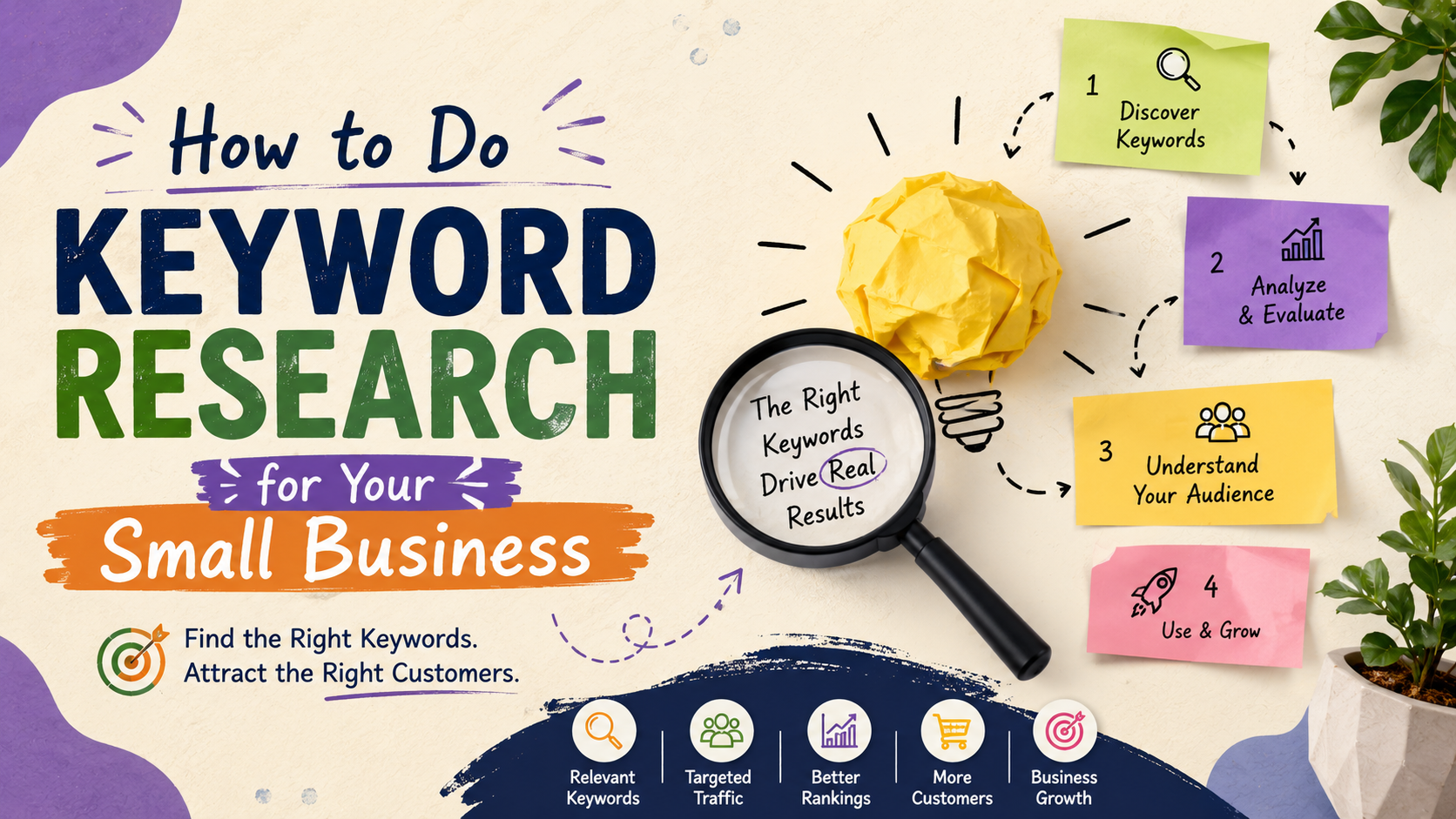
Step 4: Research Keywords
Keyword research helps you understand the words and phrases people use when searching for information.
Instead of creating content around random topics, identify relevant search terms that match your audience and business.
For example, a business could research terms related to:
- Website development
- Digital marketing
- SEO
- Small business websites
- Online marketing
Keywords should be used naturally. Avoid repeating the same keyword excessively simply to influence search rankings.
Step 5: Choose the Right Content Format
Once you know the topic, choose the format that best answers the question.
A detailed question may work well as a blog article.
A visual explanation may work better as a video or infographic.
A frequently asked question may be suitable for an FAQ section.
Step 6: Create Useful Content
Your content should provide genuine value.
A useful article should:
- Answer the main question
- Be easy to understand
- Use clear headings
- Provide practical information
- Use examples where useful
- Avoid unnecessary repetition
- Guide readers toward the next step
How Content Marketing Supports SEO
Content marketing and SEO work closely together.
Search engines need useful information to understand what a website is about. High-quality content can help a website cover relevant topics and answer questions that people search for.
SEO-friendly content can include:
- Relevant topics
- Useful keywords
- Clear headings
- Descriptive titles
- Internal links
- Helpful explanations
- Optimized images
- Mobile-friendly presentation
However, SEO should not be treated as a reason to create low-quality articles filled with keywords.
The primary goal should always be to help the reader.
For a deeper explanation of SEO, read How SEO Helps Your Business Website Rank on Google.
How Content Marketing Supports Social Media
Content marketing and social media can also work together.
A detailed article can become multiple pieces of social content.
For example:
One Blog → 3 Social Posts → 1 Short Video → 1 Infographic
This approach can help businesses get more value from the content they create.
Social media can also introduce your content to people who may not have discovered it through search.
For a comparison between SEO and social media, read SEO vs Social Media: Which Is Better for Your Business?.
How Content Marketing Supports Your Website
Your website should be the central place where your audience can find detailed information about your business.
Useful content can guide visitors from general questions toward your products or services.
For example:
Blog Article → Service Page → Contact → Enquiry
This is why content should not exist separately from your website strategy.
If you are planning a website, start with How to Plan Your Business Website Before You Build It.
How Often Should a Small Business Publish Content?
There is no universal number of articles a business must publish every week or month.
Consistency is more important than publishing a large amount of low-quality content.
A small business may be better off creating one genuinely useful article every week or two weeks than publishing several thin articles that provide little value.
Your publishing frequency should depend on:
- Your available resources
- Your audience
- Your industry
- Your content goals
- The quality of research required
What Makes Content High Quality?
High-quality content should provide something useful to the reader.
Consider these qualities:
- Accurate information
- Clear explanations
- Original insights
- Useful examples
- Good structure
- Easy readability
- Relevant information
- Strong connection to search intent
Content should be written for people first and optimized for search engines second.
Common Content Marketing Mistakes
Many businesses start content marketing but struggle to see results because of avoidable mistakes.
1. Creating Content Without a Goal
Publishing articles simply because you think you should publish something can waste time.
Every piece of content should have a reason for existing.
2. Writing Only About Your Business
Customers are usually more interested in solving their problems than reading endless promotional messages.
Balance promotional content with educational and useful information.
3. Ignoring Search Intent
If an article does not answer the question behind a search, it may struggle to satisfy the reader.
4. Focusing Only on Keywords
Keywords matter, but repeating keywords excessively can make content difficult to read.
5. Publishing Low-Quality Content
More content does not automatically mean better results.
Focus on usefulness, clarity, accuracy, and relevance.
6. Forgetting Internal Links
Internal links help readers discover related information and can help search engines understand the relationships between pages on your website.
7. Giving Up Too Quickly
Content marketing is generally a long-term strategy.
Businesses should give their strategy enough time to develop while regularly reviewing performance and improving content.
How to Build a Simple Content Calendar
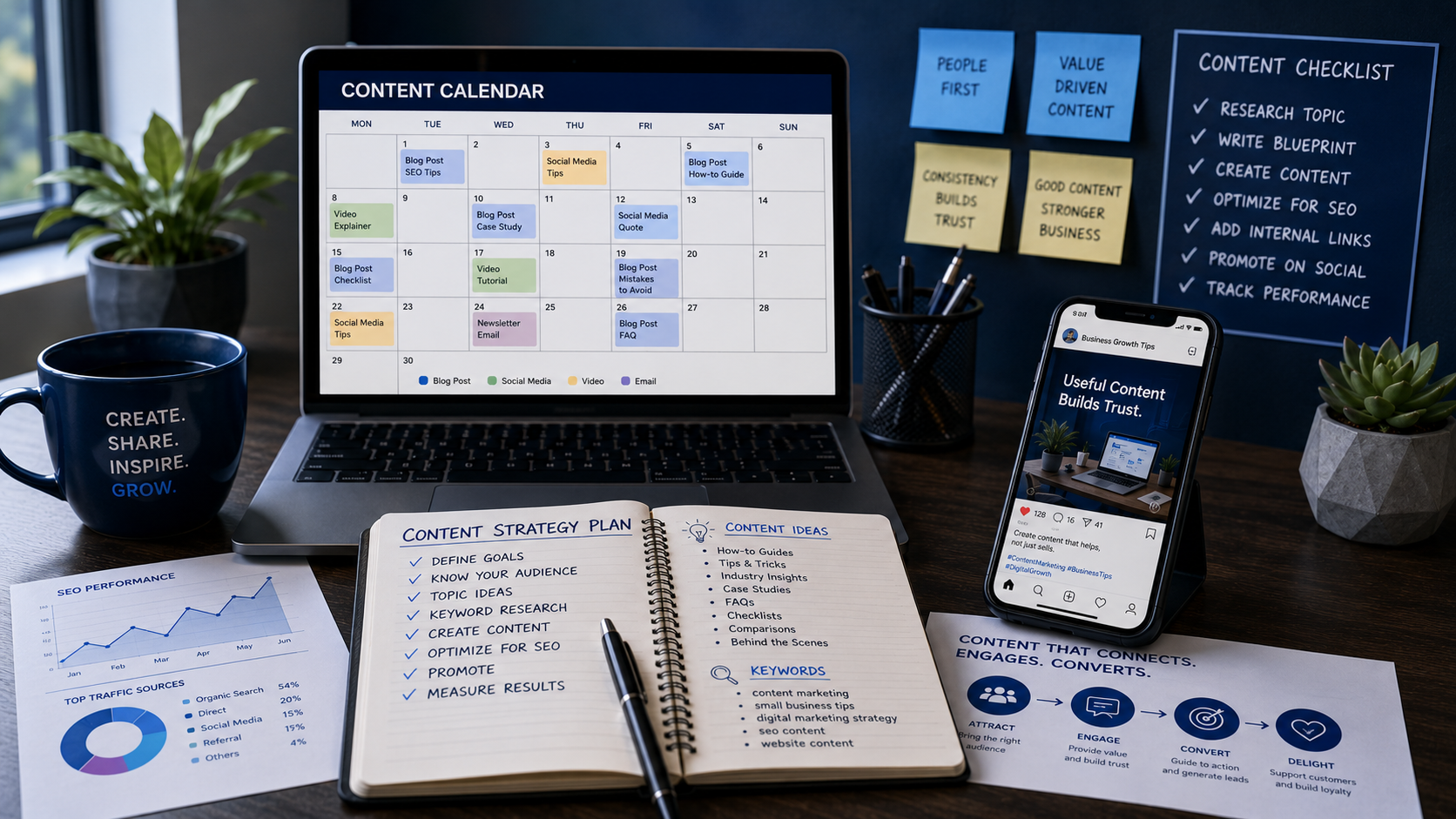
A content calendar can help you organize your publishing schedule.
For example:
| Week | Content Type | Topic | Goal |
|---|---|---|---|
| Week 1 | Blog | Beginner guide | Organic traffic |
| Week 2 | Social Media | Educational tips | Engagement |
| Week 3 | Blog | Common mistakes | Search visibility |
| Week 4 | Video | How-to explanation | Brand awareness |
The exact schedule can be adjusted according to your business and available resources.
How to Measure Content Marketing Results
Creating content is only one part of the strategy. You should also measure whether the content is helping your business.
Useful measurements can include:
- Organic website traffic
- Page views
- Search visibility
- Time spent on pages
- Enquiries
- Lead generation
- Conversions
- Social engagement
- Click-through rates
The right metric depends on the purpose of the content.
A brand awareness article and a service page may have completely different goals.
How C2D Approaches Content Marketing
At C2D (Concept to Deploy), we believe content should be connected to a larger digital strategy.
Instead of creating isolated articles, businesses can build a content system where:
- Customer questions become content ideas
- Content supports SEO
- Articles support social media
- Internal links connect related pages
- Useful information builds trust
- Service pages guide visitors toward action
This creates a stronger connection between content, website development, SEO, and business growth.
Content Marketing Checklist for Small Businesses
- Define your content goal
- Understand your target audience
- Research customer questions
- Research relevant keywords
- Choose useful topics
- Select the right content format
- Create helpful content
- Optimize content naturally for search
- Add relevant internal links
- Share useful content on social media
- Measure performance
- Improve your content over time
Final Thoughts
Content marketing is not simply about publishing blog posts.
It is about creating useful information that helps your audience, supports your digital presence, and contributes to your business goals.
For small businesses, a simple and consistent content strategy can be more effective than trying to publish large amounts of content without a clear purpose.
Start by understanding your customers, identify the questions they ask, create genuinely useful answers, and connect that content to your website, SEO, and social media strategy.
With time and consistency, your content can become a valuable part of your online presence.
Continue Your Digital Marketing Journey With C2D
You now know how content marketing works and how it can support SEO, social media, and your website.
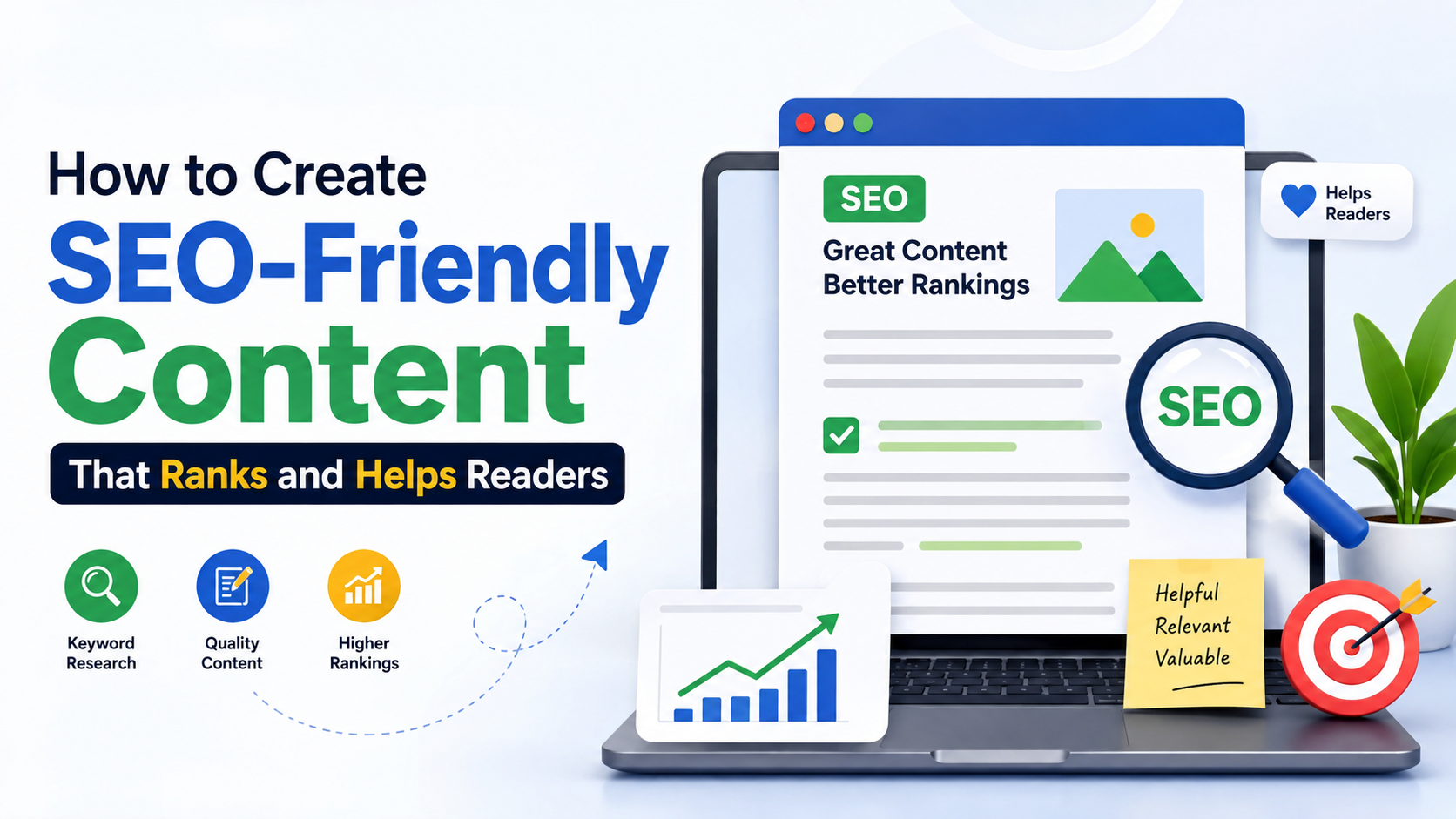
The next step is understanding how to create content that is specifically designed to perform well in search engines while still being useful to readers.
What's Next?
In the next guide, we'll look at how to create SEO-friendly content, including keywords, headings, search intent, internal links, and other important elements.
Next: How to Create SEO-Friendly Content That Ranks and Helps Readers
Build Your Digital Presence With C2D
At C2D (Concept to Deploy), we help businesses turn ideas into practical digital solutions through professional websites, SEO-focused content, and digital growth strategies.
Concept → Build → Optimize → Deploy → Grow.